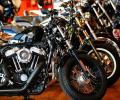
Two years after it hitched a ride with Hero MotoCorp (Hero), Harley-Davidson (Harley) and the Pawan Munjal-led firm are gearing up to ride into the middleweight (midweight) motorcycle segment (350-850cc) in the world's largest two-wheeler market.

During May, Maruti Suzuki's domestic car sales were up 2.59 per cent at 87,402 units as against 85,190 units in the same month last year.

In the domestic market, the Tata Group has lost ground in the passenger car business.

Companies also said confidence was yet to return among buyers, with many holding back their decision to buy cars.
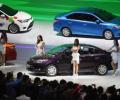
Toyota Motor Corp is betting on pricier premium models offering better safety and quality.

Now, you can own a two-wheeler for Rs 18.5 per day

Market leaders saw good traction for new cars, including the electric ones.

Led by market leader Hero Honda, two-wheeler manufacturers posted an impressive growth in sales during the month of November on the back of favourable bank lending rates and a good response to new launches. Heavy promotional campaigns and sales offers by most companies also aided demand.

Most Asian stock markets steadied on Wednesday.

The offers mostly include free insurance, exchange bonus, and free accessories
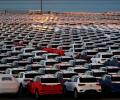
Reflecting the mood, passenger vehicle sales in November either remained muted or skidded for most manufacturers as high fuel prices and the higher cost of borrowing dampened buying sentiment.
The Mumbai-based company will take on Hero Honda, Bajaj Auto and HMSI and will have models in the 100cc, 125cc and 150cc mobike segments, and also in the ungeared low and high-powered scooter segments. Hero Honda has a 60 per cent share of the motorcycle segment, while HMSI commands a 58 per cent of the scooter market. Anand Mahindra said: "Our two-wheeler project is complete; we have already begun marketing the fleet in Bangalore."

Dealers have stocked up vehicles in the run-up to a price hike, which is expected to be announced by leading players some time this month.
The company, which is slated to introduce a new compact car later this year, is also mulling taking on Maruti Suzuki's Dzire and Honda Cars India's Amaze with a new sub-four metre sedan.

Over seven lakh vehicles have been recalled by various manufacturers in India since 2012.
Over seven lakh vehicles have been recalled by various manufacturers in India since 2012.
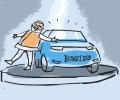
From Hyundai to Tata Motors, automakers are staring at a bleak future. With no succor provided in the Budget, the pain for companies is likely to continue for the next two quarters.

High on features, high on price and performance, these eight superbikes scorched the Indian roads this year!

Maruti Suzuki, Hyundai and Mahindra failed to register significant growth.
This could be make or break product for the company.

Toyota, General Motors, Volkswagen, Ford, Honda, Renault, Hyundai, Suzuki and Nissan are among those who boast of production of a million unit or more every year.

German car maker Volkswagen was the first company to offer airbags on all its variants in India from the beginning of this year.
Since the break up with Honda in 2011, Hero MotoCorp has succeeded in maintaining its numero uno position. But can it sustain the lead for long? How is Hero planning to maintains its top position?

At a price starting from Rs 849,000 and going up to Rs 12.14 lakh, the XUV300 competes with the Maruti Brezza, Tata Nexon, Ford EcoSport, and Honda WR-V.
With every two-wheeler company except Bajaj offering scooters now, that day is not far when the company that made 'Haamara Bajaj' a household name will get back to the segment where it once ruled.
Domestic passenger vehicle sales declined 0.84 per cent to 2,63,773 units in November from 2,66,000 units in the year-ago period. Motorcycle sales, too, declined 14.87 per cent to 8,93,538 units. Vehicle sales across categories registered a decline of 12.05 per cent to 17,92,415 units from 20,38,007 units in November 2018.
Car makers have started hiring from Gujarat's industrial training institutes (ITIs) for their factories across the country.

India has a history of jugaad, and retrofitting vehicles is one such manifestation of the legendary Indian skill. Not so long ago autorickshaws and small Marutis used to strap on subsidised LPG cylinders and power themselves to a cheap ride. There were the odd explosions, lives were lost, but the jugaad continued. Then compressed natural gas (CNG) was introduced in Delhi following a court order. Initially, customised CNG kits were fitted to conventional (internal combustion engine or ICE) autos cheaply, enabling commuting at less than half of what you would cough up for diesel. The industry is better organised now with Suzuki and Hyundai designing CNG-fired vehicles, and Mahindra and TVS manufacturing liquefied petroleum gas (LPG)-powered three wheelers.

With the new Verna, Hyundai takes on Honda. Beating the Honda City is something the country's second-largest car maker has taken upon itself with its new launch. Will it succeed?
Maruti has announced it will phase out diesel variants from April 1, 2020, when stringent BS VI norms take effect
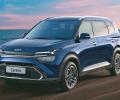
The Carens is a warning for cars such as the Tata Safari, Hyundai Alcazar, Maruti Ertiga, Toyota Innova Crista and Mahindra XUV 700, because Kia punches much harder than others in its weight category.
Sales of recently launched Grand i10 and Xcent jump even as those of competing models drop in past two months.

Maruti Suzuki India (MSI) on Monday reported a 29.1 per cent rise in total sales in October.

Mopeds are sought by people with smaller businesses, with their weight-carrying and haulage ability beside being lighter and easy to manoeuvre in traffic.

Maurti and Hyundai recorded jump in sales in May.

The number of participating automakers has fallen from 50 in 2018 to 30 this year. The count of exhibitors, including technology companies, has come down from 119 to 112. And showstopper luxury and supercar brands, including Toyota, Jeep, Lamborghini, Porsche, and Volvo will be missing. Similarly, the commercial vehicle makers also gave the show a miss -- a prolonged economic slowdown has dented their fortunes and near chances of any recovery.

Maruti, Hyundai, Tata Motors, Mahindra & Mahindra and Honda saw their passenger vehicle sales improve in August compared to the same month last year, although Ford and Toyota witnessed a decline.

Car deliveries during the nine-day period saw sharp year-on-year (double-digit increase for most automobile companies.

Domestic and foreign companies pour in a slew of investments in Gujarat.

India's first home-grown mapping company MapMyIndia is looking to list in the public market by raising around Rs 1,200 crore at a Rs 6,000-crore valuation. Sources said the company is ready with its draft red herring prospectus documents and is likely to file as early as next week. While the money will be used for business expansion, it will also give MapMyIndia's early investors, including Qualcomm, PhonePe, and Japanese mapmaker Zenrin Co., a chance to exit. The Verma family, which founded the company, will continue to remain promoters.
 © 2026 Rediff.com - Advertise with us - Disclaimer - Privacy Policy - Sitemap - Feedback - About us - Terms of use - Grievances